In Nepal’s mid-hill regions, smallholder farmers are increasingly vulnerable to seasonal water scarcity and erratic rainfall, especially during the dry season. In Syangja District, many farms rely on spring-fed sources or rain-fed agriculture, which are not dependable year-round. The terrain makes it difficult to implement conventional irrigation methods such as drip or flood irrigation, as these systems typically require high water pressure or electricity for pumps — resources that are scarce or unaffordable for most hillside farmers. This results in abandoned terraces during the dry season, reduced food production, lower incomes, and increasing pressure on already limited water resources. Climate change is amplifying these challenges, creating an urgent need for locally appropriate, low-pressure irrigation solutions that can help farmers adapt and thrive.
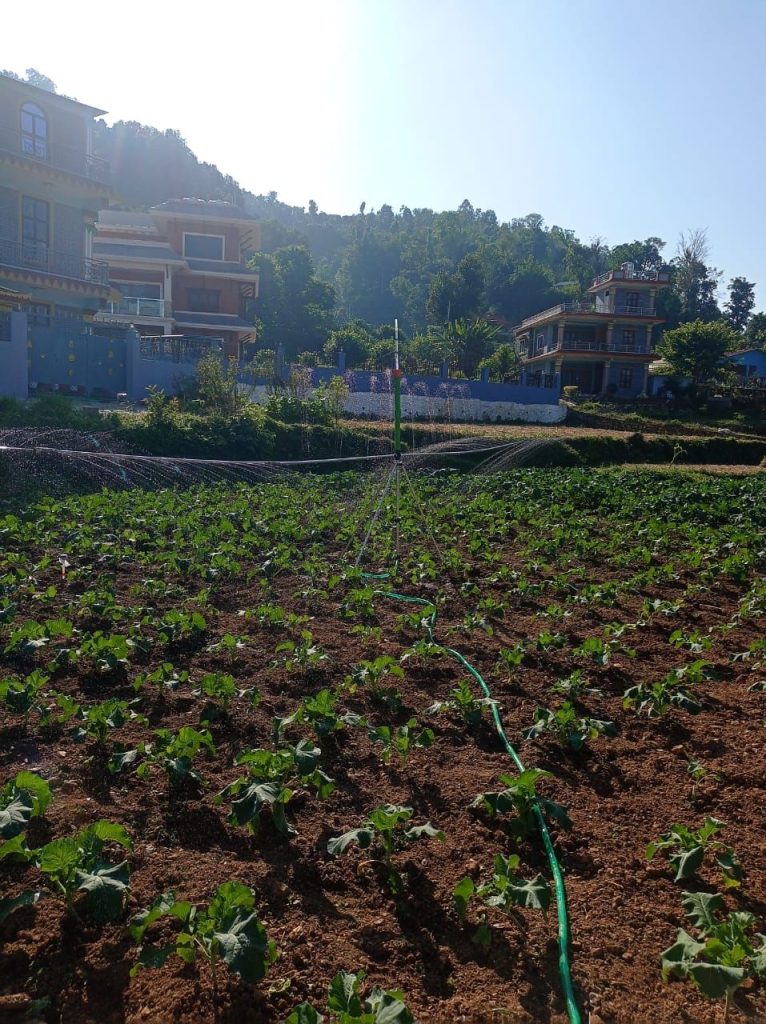
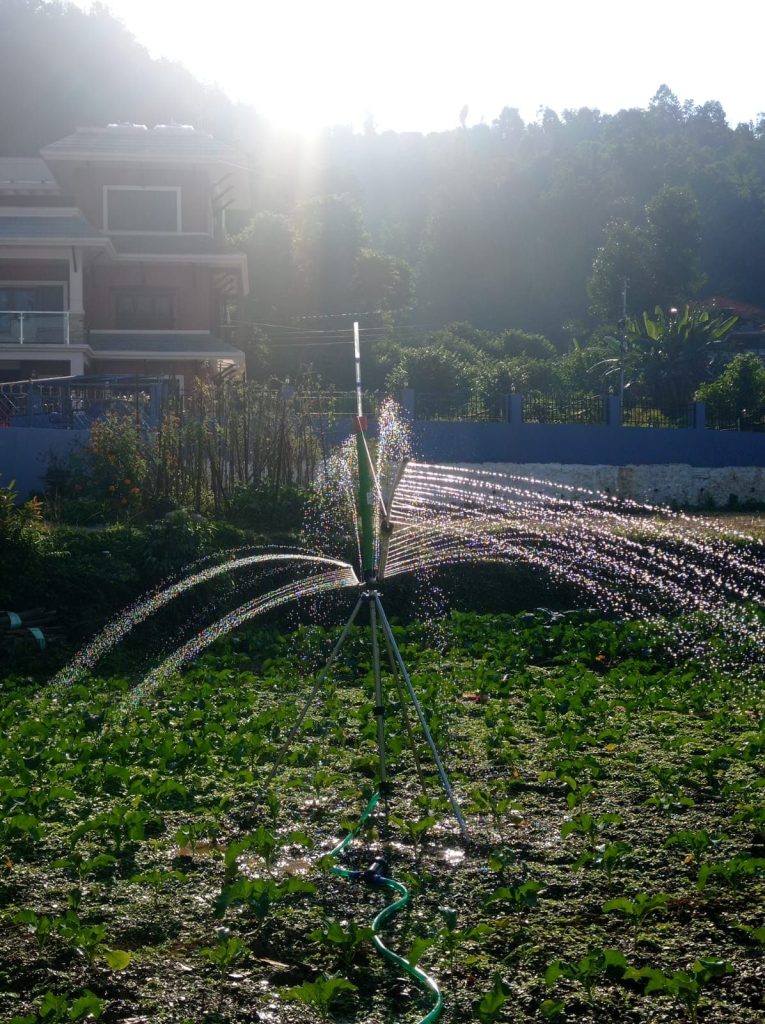
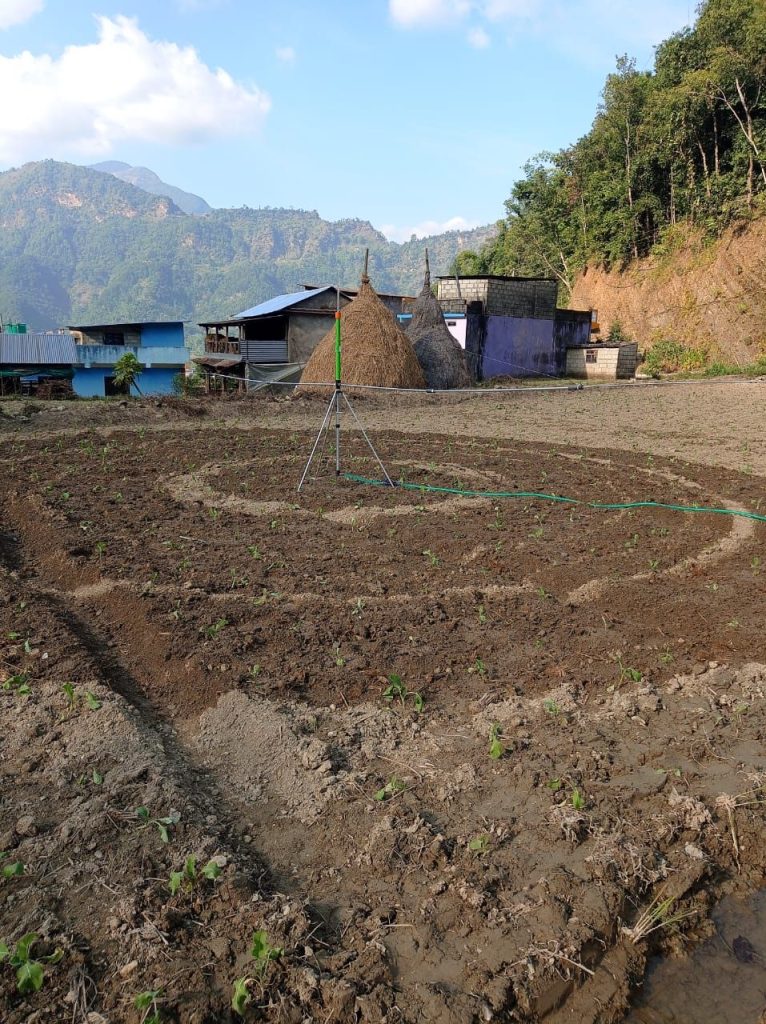
To address this, Climate Resilience Research Center (CRRC) is collaborating in the development and implementation of the Smart Sprayer system — an integrated solution designed specifically for dry-season terrace irrigation in Putalibazar and Bhirkot municipalities of Syangja, Nepal. The system combines a gravity-fed, micro-pivot irrigation device known as the “Sprayer” with a mobile-based Smart Irrigation Tool. The Sprayer is lightweight, portable, and operates at low pressure, making it ideal for use with hillside springs. Meanwhile, the Smart Irrigation Tool delivers daily, crop-specific irrigation advice to farmers via WhatsApp or SMS, using satellite data and weather forecasts to help farmers decide when and how much to irrigate. Together, these tools form a practical, cost-effective, and energy-free irrigation solution tailored for mid-hill smallholders with limited resources.
The benefits of this system are significant. Technically, it improves water use efficiency by up to 200% compared to traditional irrigation, helping preserve vital water sources. Economically, it enables farmers to grow high-value crops like cauliflower, broccoli, cabbage, tomatoes and leafy vegetables during the dry season, boosting incomes and reducing dependency on seasonal migration or expensive market produce. Socially, the project is designed with inclusivity in mind — with dedicated outreach and training for women, youth, and marginalized groups, ensuring that the benefits of innovation are widely shared. Environmentally, it reduces the risk of over-irrigation, prevents nutrient leaching, and avoids reliance on plastic-intensive systems like drip tape.
This project received funding from the Dutch government, Partners for Water subsidy scheme, enhancing water security internationally in long-term cooperation with local partners and the Dutch water sector The project is led by a strong international consortium, FutureWater and Practica, bringing expertise in smart water advisory tools and technologies. CRRC serves as the local implementation partner, ensuring that the technology is adapted to local conditions and accepted by communities. We are working closely with the municipalities of Putalibazar and Bhirkot, as well as the Agricultural Knowledge Center (AKC) and the Department of Irrigation. The project also receives scientific support from Wageningen University from the Netherlands.
CRRC with deep local roots and strong knowledge of local agricultural practices plays a crucial role in connecting international technology with the practical needs of rural communities of Syangja. Our local presence and insight are central to the success of the project. We lead community engagement, site selection, baseline assessment, before-and-after implementation impact assessment, on-the-ground coordination and capacity building components. Our team works closely with farmers and local stakeholders to assess feasibility of the smart irrigation solution “Smart Sprayer”, collecting feedback to refine the solution. We co-create business cases with local entrepreneurs, align with government priorities, and ensure inclusive participation — turning dry-season farming into a viable option for hillside communities. This project embodies CRRC’s core mission: to develop locally anchored, evidence-based solutions to climate challenges, rooted in the lived realities of rural communities of Nepal.